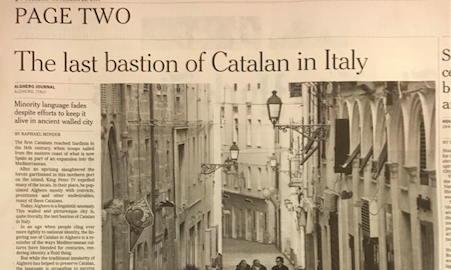
BASTIÓ CULTURAL A ITÀLIA
Inquietud al bastió català de l'Alguer
La suspensió dels vols directes de Ryanair amb Barcelona provoca rebuig i preocupació entre la població catalanoparlant de la ciutat sarda

XAVIER GONZÁLEZ
 Irene Savio ROMA
EL PERIODICO
Divendres, 25 de novembre del 2016 - 18:43 CET
El setembre del 1887, poc després haver arribat a l'illa italiana de Sardenya, el cònsol Eduard Toda i Güell es va allotjar en una pensió a l'Alguer la propietària de la qual li va dirigir un estrany interrogant. “¿D'on és vostè que parla el nostre idioma?”. L'episodi, que es rememora entre els catalanoparlants d'aquest petit enclavament, parla de l'enrevessat passat multicultural que han deixat tantes civilitzacions que van passar pel lloc, on fins i tot es va arribar a desconèixer que el que es parla a l'Alguer és un dialecte del català. Una herència que ara els hereus de la colonització catalana del XVI no volen perdre.
Així, després que l'aerolínia de baix cost Ryanair confirmés fa dies la suspensió dels seus vols des de l'Alguer que permetien la connexió directa amb Catalunya -ja interromputs el gener d'aquest any-, els catalans italians d'aquesta ciutat de Sardenya han tornat a desenterrar la destral de guerra, en el que veuen com un altre obstacle per mantenir la seva cultura. “És que amb això molts estudiants que viatjaven a Catalunya han deixat de fer-ho”, reflexiona Carla Valentino, de l'associació Òmnium Cultural de l'Alguer.
Als seus 50 anys, Valentino, que va néixer a l'Alguer de pares catalanoparlants, se sent un estendard d'una disputa que apunta a no perdre un vincle i una llengua que fa un segle parlaven gairebé tots -d'acord amb un cens de principis del segle XX-, però que en l'actualitat ja molts han abandonat per l'italià. “Fa 20 anys que sóc activista”, explica la dona, que també és una de les poques que tradueixen a l'alguerès. “Molts de nosaltres encara som bilingües. Tota la meva família n'és”, coincideix Dolores Serra, periodista de Catalan TV, un canal de televisió que s'emet des del 2004.
En veritat, ningú sap amb certesa quants catalanoparlants queden a l'Alguer, una ciutat de 44.000 habitants situada a la costa de l'illa que mira cap a Catalunya. D'acord amb els últims i parcials estudis que hi ha, la gran majoria de la població l'entén, menys de la meitat el parla i molt pocs el saben escriure. En els últims anys han sorgit diverses associacions que es dediquen a donar cursos per aprendre l'idioma i que fins i tot organitzen visites turístiques i excursions naturistes a l'alguerès.
A més, la població catalanoparlant de l'Alguer també compta en els últims temps amb un creixent nombre de petites empreses mediàtiques que, molt enèrgicament, promouen l'idioma. A més de Catalan TV, també ha sorgit un diari, Alguer.cat, que des del 2008 s'encarrega de fomentar “l'ús normal” de la llengua -segons es llegeix a la seva web- i, des de fa cinc anys, una ràdio local ha començat a emetre un programa bilingüe (meitat en italià, meitat en català-alguerès).
“I ho seguirem fent, encara que els problemes són molts. La interrupció de l'enllaç aeri és un altre més. Però també hi ha el tema que a les escoles no existeix un verdader ensenyament d'alguerès”, argumenta Nicola Nieddu, un dels conductors del programa radiofònic Onda Stereo. La queixa de Nieddu remet al fet que l'alguerès no figura en els currículums escolars de l'Alguer, ni com a idioma estranger, malgrat que existeixin lleis nacionals que no li tanquen la porta a aquesta possibilitat. “Durant molt temps, el nostre idioma ha sigut desacreditat com la parla de la gent ignorant”, es queixa Valentino, subratllant que fins i tot a penes hi ha cartells en els dos idiomes.
Aquesta argumentació es basa en el fet que, com ha passat amb altres idiomes minoritaris i amb els dialectes que prevalien abans a Itàlia, l'Estat italià ha frenat -a partir del final de la segona guerra mundial- les minories lingüístiques d'Itàlia, privilegiant l'alfabetització de l'italià. Cosa que a gran part de la península italiana va ser absorbit sense més sobresalts. “El cert és que probablement alguns de nosaltres se senten més pròxims a les seves arrels. Per no parlar dels beneficis econòmics que podria donar una relació més estreta amb Catalunya”, afegeix Nieddu.
No obstant, en una illa autonòmica on l'alguerès competeix amb altres idiomes minoritaris -sard logudorès i sard campidanès- i alguns dialectes -el gallurès i el sassarès-, les autoritats polítiques de l'Alguer han tingut una actitud intermitent sobre el tema. Quan l'últim alcalde de la localitat va ser elegit, per exemple, va pronunciar el seu discurs d'investidura en alguerès, i des del 2009 la Generalitat de Catalunya ha obert una oficina allà, que avui dirigeix el valencià Joan Elias Adell. “Va passar arran d'una petició de l'Ajuntament de l'Alguer”, puntualitza Adell.
El setembre del 1887, poc després haver arribat a l'illa italiana de Sardenya, el cònsol Eduard Toda i Güell es va allotjar en una pensió a l'Alguer la propietària de la qual li va dirigir un estrany interrogant. “¿D'on és vostè que parla el nostre idioma?”. L'episodi, que es rememora entre els catalanoparlants d'aquest petit enclavament, parla de l'enrevessat passat multicultural que han deixat tantes civilitzacions que van passar pel lloc, on fins i tot es va arribar a desconèixer que el que es parla a l'Alguer és un dialecte del català. Una herència que ara els hereus de la colonització catalana del XVI no volen perdre.
Així, després que l'aerolínia de baix cost Ryanair confirmés fa dies la suspensió dels seus vols des de l'Alguer que permetien la connexió directa amb Catalunya -ja interromputs el gener d'aquest any-, els catalans italians d'aquesta ciutat de Sardenya han tornat a desenterrar la destral de guerra, en el que veuen com un altre obstacle per mantenir la seva cultura. “És que amb això molts estudiants que viatjaven a Catalunya han deixat de fer-ho”, reflexiona Carla Valentino, de l'associació Òmnium Cultural de l'Alguer.
Als seus 50 anys, Valentino, que va néixer a l'Alguer de pares catalanoparlants, se sent un estendard d'una disputa que apunta a no perdre un vincle i una llengua que fa un segle parlaven gairebé tots -d'acord amb un cens de principis del segle XX-, però que en l'actualitat ja molts han abandonat per l'italià. “Fa 20 anys que sóc activista”, explica la dona, que també és una de les poques que tradueixen a l'alguerès. “Molts de nosaltres encara som bilingües. Tota la meva família n'és”, coincideix Dolores Serra, periodista de Catalan TV, un canal de televisió que s'emet des del 2004.
En veritat, ningú sap amb certesa quants catalanoparlants queden a l'Alguer, una ciutat de 44.000 habitants situada a la costa de l'illa que mira cap a Catalunya. D'acord amb els últims i parcials estudis que hi ha, la gran majoria de la població l'entén, menys de la meitat el parla i molt pocs el saben escriure. En els últims anys han sorgit diverses associacions que es dediquen a donar cursos per aprendre l'idioma i que fins i tot organitzen visites turístiques i excursions naturistes a l'alguerès.
PROMOCIÓ CREIXENT
A més, la població catalanoparlant de l'Alguer també compta en els últims temps amb un creixent nombre de petites empreses mediàtiques que, molt enèrgicament, promouen l'idioma. A més de Catalan TV, també ha sorgit un diari, Alguer.cat, que des del 2008 s'encarrega de fomentar “l'ús normal” de la llengua -segons es llegeix a la seva web- i, des de fa cinc anys, una ràdio local ha començat a emetre un programa bilingüe (meitat en italià, meitat en català-alguerès).
“I ho seguirem fent, encara que els problemes són molts. La interrupció de l'enllaç aeri és un altre més. Però també hi ha el tema que a les escoles no existeix un verdader ensenyament d'alguerès”, argumenta Nicola Nieddu, un dels conductors del programa radiofònic Onda Stereo. La queixa de Nieddu remet al fet que l'alguerès no figura en els currículums escolars de l'Alguer, ni com a idioma estranger, malgrat que existeixin lleis nacionals que no li tanquen la porta a aquesta possibilitat. “Durant molt temps, el nostre idioma ha sigut desacreditat com la parla de la gent ignorant”, es queixa Valentino, subratllant que fins i tot a penes hi ha cartells en els dos idiomes.
MINORIES LINGÜÍSTIQUES
Aquesta argumentació es basa en el fet que, com ha passat amb altres idiomes minoritaris i amb els dialectes que prevalien abans a Itàlia, l'Estat italià ha frenat -a partir del final de la segona guerra mundial- les minories lingüístiques d'Itàlia, privilegiant l'alfabetització de l'italià. Cosa que a gran part de la península italiana va ser absorbit sense més sobresalts. “El cert és que probablement alguns de nosaltres se senten més pròxims a les seves arrels. Per no parlar dels beneficis econòmics que podria donar una relació més estreta amb Catalunya”, afegeix Nieddu.
No obstant, en una illa autonòmica on l'alguerès competeix amb altres idiomes minoritaris -sard logudorès i sard campidanès- i alguns dialectes -el gallurès i el sassarès-, les autoritats polítiques de l'Alguer han tingut una actitud intermitent sobre el tema. Quan l'últim alcalde de la localitat va ser elegit, per exemple, va pronunciar el seu discurs d'investidura en alguerès, i des del 2009 la Generalitat de Catalunya ha obert una oficina allà, que avui dirigeix el valencià Joan Elias Adell. “Va passar arran d'una petició de l'Ajuntament de l'Alguer”, puntualitza Adell.